Here's what nobody tells you about desire mismatch
One of you wants sex three times a week. The other wants it twice a month. One of you gets turned on fast. The other needs 30 minutes of warm-up. One of you wants intense direct stimulation. The other finds it overwhelming. These gaps aren't failures. They're the statistical norm.
What makes them feel like failures is that most couples treat them as problems to solve instead of information to work with. A lemon vibrator doesn't erase the difference between your bodies or your timelines. It does something better: it gives you a tool that lets both of you get what you actually need in the same session, without resentment building on either side.
Why desire mismatch happens (and it's not what you think)
There's a persistent myth that desire differences mean one person loves the other less, or that one partner is broken. Neither is true. Desire is shaped by stress, sleep, health, hormones, medication, relationship security, and literally dozens of other factors that have nothing to do with attraction or commitment.
In my practice, I see couples where the partner with lower baseline desire is actually the one with higher capacity for orgasm once they're engaged. The mismatch isn't about pleasure potential. It's about entry point.
When you bring a tool like a lemon clitoral vibrator into the equation, you're not asking someone with lower desire to want more. You're meeting them where they are and letting the external stimulus handle the work their body isn't ready to do yet. This is the opposite of pressure. It's actually generosity.
The conversation before you introduce a vibrator
This matters more than the vibrator itself. Here's what I tell couples in my office:
Don't lead with the tool. Lead with the desire. Say something like: "I've been thinking about us lately, and I noticed we sometimes want different things in the same moment. I don't want either of us to feel like we're settling. I want to explore ways we both feel good."
Then listen. The partner with lower desire often carries shame about it, or worry that their partner will leave. The partner with higher desire often carries resentment about feeling rejected. Both of those need air before any equipment enters the room.
Once you've done that work, introducing a lemon vibrator becomes a practical solution instead of an accusation. It's a bridge, not a Band-Aid.
How to actually use it when desire timelines don't match
Here's a real scenario: one partner is aroused and wants to move forward. The other is interested but not quite there yet. This is where a lemon clitoral vibrator changes everything.
The partner with slower arousal can use it on themselves while the other partner touches them, or kisses them, or talks to them. The vibration does the physical work of building sensation. Their partner provides the intimacy and presence. After 10-15 minutes, arousal usually catches up, and you're on more equal footing. No one had to wait. No one had to push.
Alternatively, if one partner reaches climax much faster than the other, a vibrator gives the slower partner a way to get what they need without their faster partner having to maintain effort for 20+ minutes. One partner orgasms, then uses a vibrator to intensify their own experience while their partner recovers. Or they use it together afterward for different reasons. The logistics stop mattering once you see the vibrator as a tool for individual pleasure, not just a couples activity.

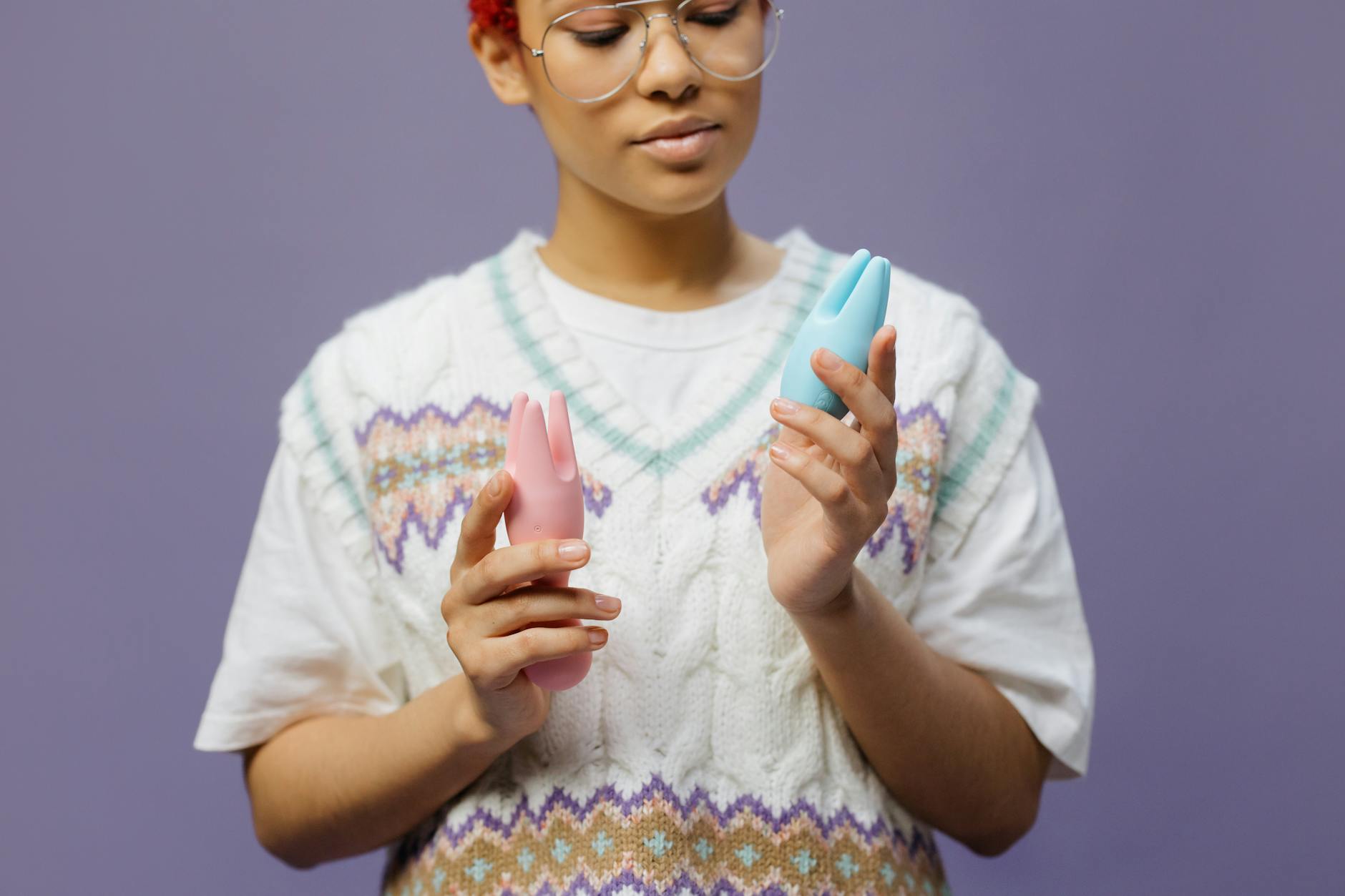
Photo by SHVETS production on Pexels
The intensity question
Often when desire levels differ, so does tolerance for intensity. The person with higher desire wants more direct stimulation. The person with lower desire finds intense sensations overwhelming or uncomfortable.
A lemon vibrator has multiple intensity settings. This is your secret weapon. Start at a lower setting when you're together. Let the slower-to-arousal partner control the intensity themselves, so they're never surprised or pushed past their comfort. When they're ready, they can increase it. When they're not, they don't have to explain why.
The higher-desire partner can use a separate vibrator, or use it during solo sessions, or dial up the intensity on theirs while their partner keeps theirs at a comfortable level. You're not trying to have the same experience. You're trying to both have a good one.
What actually shifts when you do this
After about four weeks of using a lemon vibrator this way, something interesting happens in most couples. The pressure dissolves. The partner with lower desire stops bracing for demands they're not ready for. The partner with higher desire stops feeling rejected. Sex stops being a negotiation where someone loses.
I've had clients tell me that introducing a tool actually made them want each other more. Not because the sex got better (though often it does), but because the shame and resentment went away. When no one is feeling pressured or rejected, attraction comes back naturally.
Your desire levels might not sync up completely. That's fine. But you can sync up your willingness to show up for each other, and a lemon vibrator gives you a concrete way to do that.
The logistics that actually matter
A few practical things: keep your vibrators charged and accessible, not hidden. This removes the awkward moment of searching when you're already in bed. Use water-based lubricant if you're both using vibrators at the same time (it plays well with silicone). Establish a simple signal for when someone needs a break or wants to change intensity. None of this requires a long negotiation. It's just basic infrastructure.
If one of you has never used a clitoral vibrator before, try exploring what different sensations feel like on your own first. This removes the pressure of discovering your preferences in front of your partner. Most people find they enjoy it more when they already know their own body's response.
When to get support beyond the vibrator
Sometimes desire differences point to something deeper. If one partner has experienced trauma around touch or intimacy, a vibrator alone won't solve that (though it can help). If medication is affecting arousal, that's a conversation for a doctor. If resentment is long-standing, couples therapy often needs to come before new tools.
A lemon vibrator is a practical solution for a common logistical problem. It's not a substitute for addressing the underlying relationship dynamics if those are what's actually stuck.
The shift that matters most
Let's be honest: admitting that your desire doesn't match your partner's feels vulnerable. It can feel like failure. It's not. It's information. And once you stop treating it as a problem and start treating it as a variable you can work with, everything changes.
A lemon clitoral vibrator is just a tool. What matters is that it's a tool that says: I want you to feel good. Even if that looks different from how I feel good. Even if we need different things. We can both win here.
That's the actual shift. And that's what makes it work.
FAQ
Can we use the same vibrator together?
Yes, but most couples find having their own is easier. It removes the coordination of passing it back and forth, and you can each control your own intensity. A lemon vibrator is affordable enough that buying two isn't a big financial decision.
What if my partner thinks introducing a vibrator means I'm not attracted to them?
This is the fear that keeps most couples from trying. Address it directly before you introduce the tool. Say something like: "This isn't about you not being enough. It's about both of us getting what we need in the same experience." If that fear runs deep, a few couples therapy sessions can help reframe it.
How do I bring this up without making it weird?
You've already made it weird by not talking about it. Silence makes it weird. Actual conversation makes it normal. Say: "I've been thinking about how we might both feel better during sex, and I came across something I'd like to try together." Then show them the vibrator. Most partners respond well when you're honest and direct.
What if one of us has never used a vibrator before?
Start with solo exploration. Let the less-experienced partner try it on their own first, so they understand their own response before sharing it with their partner. This removes performance pressure and makes them more confident when you use it together.
Does using a vibrator mean we'll need it every time?
No. Some couples use it most times. Others use it occasionally. It becomes part of your toolkit, not a requirement. If you find yourself feeling dependent on it, that's usually a signal that there's something else going on (stress, disconnection, medical) that's worth exploring.
What if one partner wants to use it and the other doesn't?
Respect that boundary. A vibrator is an enhancement, not a necessity. If one partner is uncomfortable, pressuring them defeats the purpose. That said, the discomfort is worth exploring. Is it practical? ("It's too loud.") Is it emotional? ("I feel replaced.") Is it physical? ("It feels uncomfortable.") Different answers point to different solutions.