Let's name what's actually happening
Touch avoidance after sexual trauma isn't a choice you're making. It's your nervous system doing exactly what it learned to do: protect you. The problem is that protection now lives in your body like a resident alarm system, firing even when you're safe. That's not weakness. That's biology under stress.
Here's the thing: your capacity for pleasure didn't get deleted. It's not gone. But right now, it's locked behind a door your body slammed shut a long time ago, and the key isn't another person. It's you.
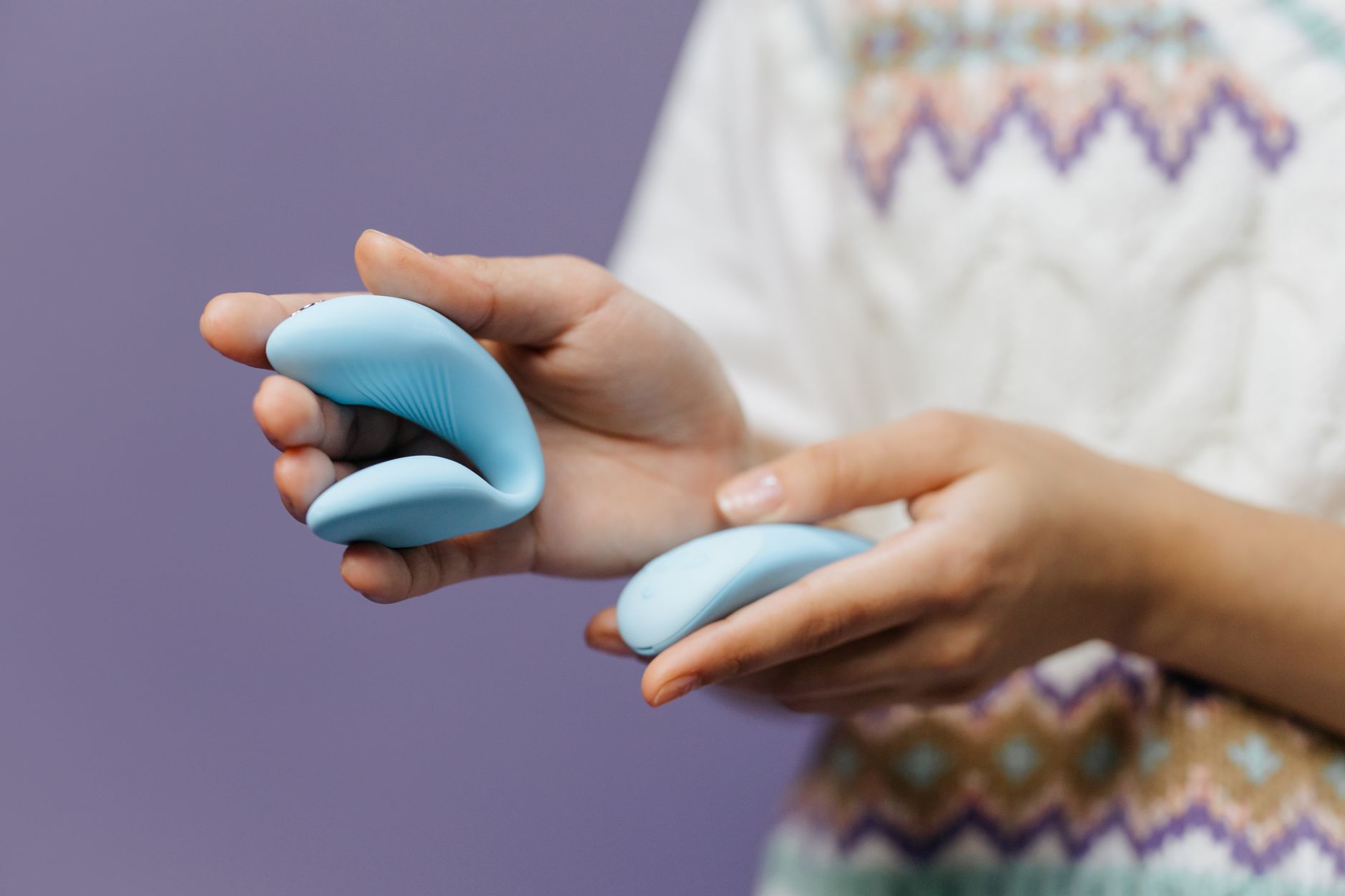
A lemon vibrator can be that key, because it gives you something that partnered sex often can't: absolute control, predictability, and the ability to stop instantly without negotiating or explaining.
Why touch-avoidance shows up after trauma
Sexual trauma rewires your threat response. When you experience sexual violation, your body learns that physical touch can mean harm. So your nervous system starts hypervigilant. The slightest unexpected contact, the gentlest hand on your shoulder, even a partner's predictable kiss can trigger a flood of cortisol and adrenaline.
This isn't your fault. Your body isn't broken. It's doing its job.
But here's what makes solo pleasure with a lemon vibrator different: there's no element of surrender. You hold it. You control every movement, every intensity level, every second. This active control is neurologically calming. Your brain can register that you are the one choosing sensation. You are the one with the power.
Somatic therapists call this "titration." It means slowly and safely introducing sensation in micro-doses while staying grounded and in control. A lemon clitoral vibrator is essentially a titration tool. You can turn it on at the lowest setting, explore for ten seconds, turn it off, breathe, and come back when you're ready.
The nervous system component (why this matters)
Your nervous system has two main states: sympathetic (fight-or-flight) and parasympathetic (rest-and-digest). Trauma keeps you mostly in sympathetic mode. Healing means gradually teaching your nervous system that it's safe to drop down into parasympathetic.
Solo pleasure with a device you control can activate parasympathetic response precisely because there's zero threat. No one is doing anything to you. You're choosing everything. You're safe.
Sex with a partner after trauma requires your nervous system to trust that person, to drop your guard, to believe they won't hurt you. That's important work, but it's harder work. And it's not where you start.
Starting with solo exploration using a lemon vibrator means you're building a baseline experience of pleasure that isn't tied to vulnerability or trust in another person. You're relearning what your body can feel when it's safe. That baseline becomes the foundation for everything that comes later.
Practical setup: creating safety first
Before you even touch a vibrator, your environment matters. Not because you're doing anything wrong, but because your nervous system needs to know there are no surprises coming.
Lock the door. This sounds basic, but the knowledge that interruption is impossible changes everything. Your brain can relax.
Make it slow. Don't schedule this around anything else. Give yourself at least thirty to forty minutes even if you use the vibrator for only five of them. Your nervous system needs time to settle before and after.
Temperature and comfort. Are you cold? Anxious people are often cold people. A blanket nearby helps. Clothing that's easy to remove or move aside (not clothes you have to undress from) can feel less exposing. You're in control of how much of your body is available at any moment.
Know your exit. Before you start, know exactly how you'll get grounded if you need to stop. Some people keep ice cubes nearby. Some step outside for fresh air. Some have a specific song they play. The point is: you've already planned your landing, so your nervous system doesn't have to keep one eye on the exit.
How to actually start
First time: just hold the lemon vibrator. Don't turn it on. Let your hand get used to the weight and texture. This is a scan. Your nervous system is gathering data: "This is smooth. This is cool. This is my hand holding it."
Second session: turn it on at the lowest setting for five seconds. Then off. That's the whole session. Five seconds. Your job is not to have an orgasm or achieve anything. Your job is to prove to your nervous system that you can start something and stop it. Control is the goal, not sensation.
Third session: maybe ten seconds on the lowest setting. Maybe applied to your inner thigh or your abdomen first, not the clitoris. Anywhere that feels less vulnerable.
You might spend two weeks at this level. That's not slow. That's healing.
Once you feel bored—genuinely bored, not anxious—you can try a slightly higher setting. Once you feel bored there, you can try positioning the lemon vibrator closer to the clitoris. The nervous system only moves forward when it's ready. Pushing is the opposite of what you're trying to build.
Working with arousal (it might be absent, and that's normal)
Here's something no one tells you: after trauma, arousal can go completely flat for years. You might not feel any sexual desire at all. You might feel physical sensation but no psychological turn-on. You might feel frustrated because your body used to respond and now it doesn't.
This is normal. Arousal is partly nervous system, partly hormonal, partly psychological. When you're healing from trauma, your nervous system is in protection mode, and it will keep desire locked down as long as it thinks you're in danger.
So your solo exploration with a lemon vibrator might not include arousal for a while. And that's fine. You're not working toward arousal. You're working toward something earlier: you're working toward the belief that touch can feel good and you control it.
Sometimes that belief comes first. Sometimes arousal catches up months later. Both are healing.
If you do feel any spark of arousal, even tiny, that's information. Notice it. Anchor it. You've just proved something to your nervous system: pleasure is possible in conditions where you have control.
The partner conversation (if there is one)
If you're in a relationship, your partner needs to know two things, and ideally they'll understand them from you directly rather than you leaving hints.
First: "I'm working on healing from trauma. Part of that means exploring pleasure on my own terms, alone, using a device I can control completely. This isn't about you or about our relationship. It's about me rebuilding trust with my own body."
Second: "If I seem less interested in partnered sex right now, that doesn't mean I'm less interested in you. My nervous system is learning that it's safe. That takes time. Here's what I need from you: patience, and the knowledge that you asking for reassurance makes this harder, not easier."
A partner who loves you will get this. A partner who can't—who makes your healing about them, who pressures you toward partnered sex before you're ready, who punishes you for needing solo time—isn't a safe partner. And you already know what unsafe partners feel like.
When to bring in professional support
If you're experiencing flashbacks during solo exploration, intrusive memories, or a complete inability to feel any sensation at all, that's time to talk to a trauma-informed therapist. Not a regular therapist. A specialist in sexual trauma.
There are specific modalities that work: EMDR, somatic experiencing, trauma-focused CBT. These aren't talk therapy. They're neurobiology-based approaches that help your nervous system reprocess the trauma itself.
You don't have to white-knuckle this alone. And honestly, the support can make the whole process faster and less painful.
The timeline is yours
Someone reading this might spend six months exploring solo pleasure with a lemon vibrator before they're ready to have partnered sex again. Someone else might be ready in three months. Someone else might take two years.
None of those timelines are wrong. Your nervous system heals on its schedule, not on anyone else's.
Here's what I know: healing is possible. Your capacity for pleasure is still there. Your body is not damaged beyond repair. And you don't have to earn the right to feel good. You deserve to reclaim sensation on your own terms, in your own time, with complete control. A lemon clitoral vibrator is just a tool to make that reclamation easier. The actual healing is all you.
Common questions about vibrators and trauma recovery
Can using a vibrator trigger flashbacks?
It's possible, yes. If it does, that's information, not failure. Flashbacks mean your nervous system is still processing the trauma. Stop, ground yourself, and talk to a trauma-informed therapist. Sometimes the flashback happens because you pushed too fast. Sometimes it's just part of healing. Either way, you need professional support.
How long until I feel pleasure like I used to?
Pleasure will probably feel different when it returns, not exactly the same as before. That's not loss. That's your nervous system recalibrating. The pleasure that comes after trauma is often deeper and more embodied because you've had to work for it consciously. Don't expect your pre-trauma baseline. Expect something new.
Is solo exploration selfish if I'm in a relationship?
No. Healing yourself is the opposite of selfish. You can't partner well until you trust your own body. Using a lemon vibrator to rebuild that trust is essential work, and it actually makes you a better partner later.
What if my partner feels threatened by me exploring solo?
That's his insecurity, not your problem. You're healing from trauma. His discomfort with your healing is a yellow flag at minimum. You don't owe him access to your body before you're ready. If he can't sit with that, couples therapy might help—but only if he's willing to work on his own stuff.
Can medication affect how a lemon vibrator feels?
Yes. Antidepressants, anti-anxiety meds, and trauma medications can all change sensation and arousal. If you're on anything, it's worth mentioning to your therapist so you're not attributing a neurological side effect to emotional progress.
Is there a "right" way to use a vibrator while healing?
No. The right way is whatever way you feel safe and in control. Some people use it externally only for months. Some people never go internal. Some people use it during meditation. There's no wrong answer as long as you're the one deciding every single variable.
Healing from sexual trauma is possible. Reclaiming pleasure is possible. And you don't have to do it with a partner, under pressure, or on anyone else's timeline. If you're ready to start exploring, a lemon vibrator gives you the control your nervous system desperately needs. If you're not ready yet, that's okay too. Healing happens at its own pace. When you're ready to take the next step, we're here.
If you'd like to talk through your specific situation, reach out to us. And if you're working with a trauma therapist, they might find it helpful to know that you're exploring solo sensation—it's all part of the same healing work.