
Let's name what you're actually feeling
Guilt. Shame. The sense that this is somehow frivolous, selfish, or wrong. Maybe you were raised in a religious household. Maybe you're in a relationship and feel like solo sex means you're betraying your partner. Maybe you're older and internalized decades of messaging that women's pleasure was either for men or not really a priority. Whatever the root, the feeling lands the same way: awkward, complicated, off-limits.
Here's what I know after 20 years of working with couples and individuals on this exact issue. That feeling isn't about you. It's about the culture you grew up in.
Why guilt shows up around solo pleasure
We're not born thinking masturbation is shameful. Children self-pleasure without embarrassment until they're taught not to. By the time you're an adult, you've absorbed messages from family, religion, media, and romantic partnerships about whose pleasure "counts" and whose doesn't.
For many people, especially women, the narrative is: your pleasure exists for your partner's benefit, or it shouldn't exist at all. Solo sex gets filed under "wasteful" or "lonely" instead of what it actually is: the foundation of knowing yourself sexually.
Some of the guilt is also about partnership. If you're coupled, there's often an unspoken belief that wanting solo time means the relationship isn't working. That's a lie designed to make you smaller. Knowing your own body, your own rhythm, and what actually turns you on makes you a better partner, not a worse one.
The physical truth that helps
Your body has no guilt. Your clitoris doesn't care what cultural messages you absorbed. When you touch yourself, neural pathways light up. Blood flows where it needs to go. Endorphins release. Tension drops. These are not morally ambiguous events. They're biology.
Using a lemon clitoral vibrator changes the dynamic in a specific way. It's not your hand, so there's less of the "I'm doing this to myself" feeling that can trigger shame spirals. It's an external tool, which somehow feels more neutral. It's also more effective, which means you spend less time in your head judging yourself and more time in your body experiencing sensation.
The suction-based design of a quality lemon vibrator works particularly well for people relearning pleasure after guilt has gotten in the way. It's not a battering ram. It's precise, gradually building, and stops the moment you move away. That control feels less aggressive than traditional vibrators, which can feel demanding in a way that amplifies the "is this okay?" anxiety.
Separating partnership pleasure from solo pleasure
If you're in a relationship, have this conversation directly: "I want to explore my own pleasure on my own time. This isn't about you or our sex life. It's about knowing myself better."
Most insecure partners' real fear isn't that you're getting off without them. It's that they're not enough. That's a different conversation. Don't let it become your excuse to skip exploring solo pleasure. Your pleasure isn't a statement about your partner.
Some partners actually find it hot. Some need time to adjust. Some need reassurance that you still want them. All of those are fine. But none of them are reasons to deprive yourself of understanding your own body.
Getting started when shame feels thick
Three tactics that work:
Start small and private. You don't need a long session. Five minutes. A locked door. No performance pressure. The goal isn't an orgasm. The goal is feeling what feels good without judgment.
Use language that serves you. Don't think "masturbation" if that word carries baggage. Think "exploring," "self-pleasure," "checking in with my body." Language matters because your brain responds to it. Find words that feel neutral or positive to you.
Remember that arousal takes time. If you're carrying guilt, your body might be defended. You might not get turned on for 10 or 15 minutes. That's normal. A lemon sexual toy helps because it does the work while your nervous system settles down. By the time you're actually aroused, you're not working against your own hesitation anymore.
What happens when you stick with it
After a few sessions, something shifts. You stop narrating it to yourself. You stop waiting for guilt that doesn't come. You actually feel what your body is telling you. You learn what rhythm works, what pressure feels good, what kind of touch leads somewhere.
That knowledge is not frivolous. It directly improves partnered sex because you know what to ask for. It improves your self-image because you're treating your pleasure as normal, not suspect. It improves your nervous system because you're regularly releasing tension and reinforcing that touch and pleasure are safe.
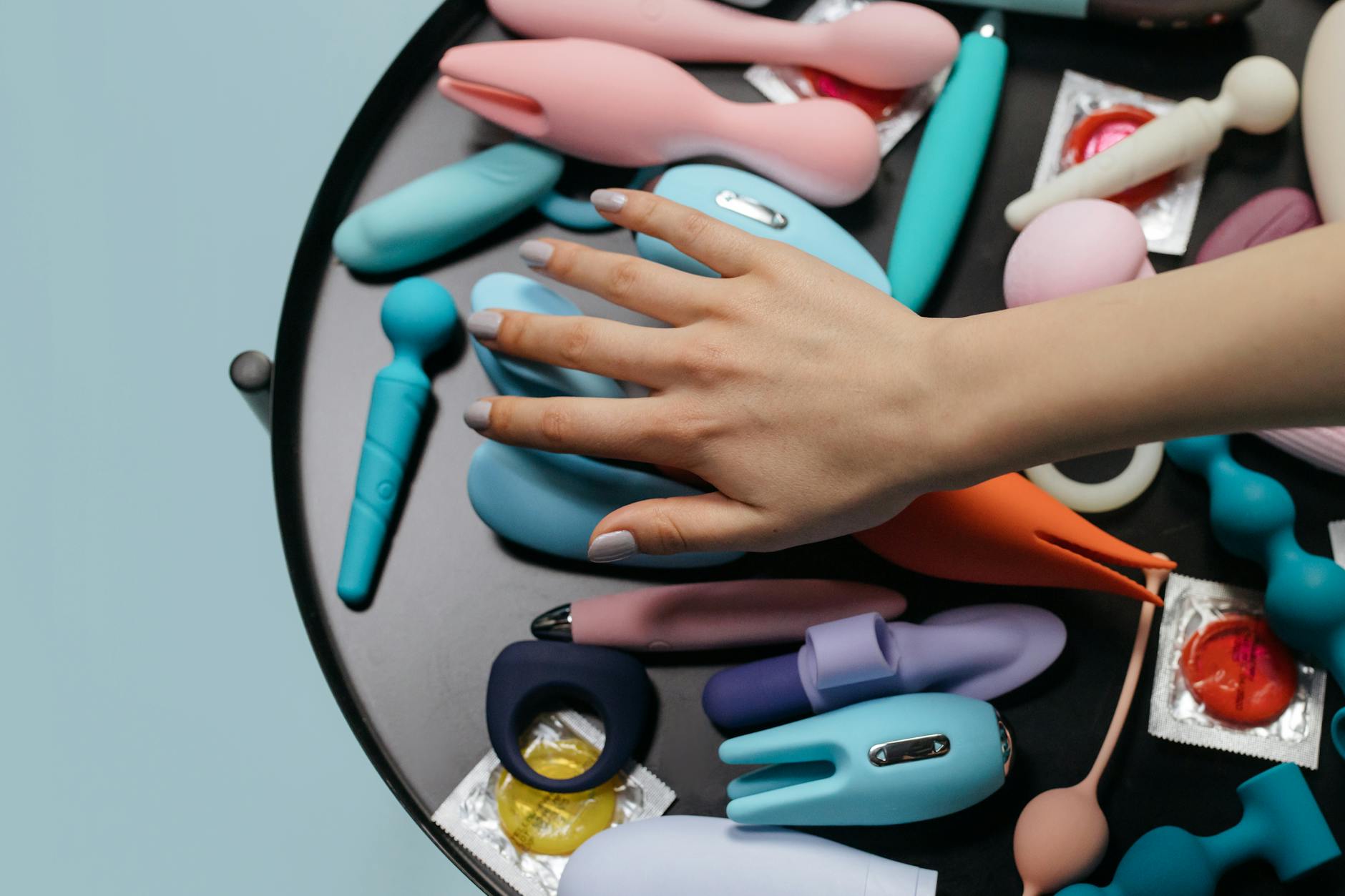
Photo by cottonbro studio on Pexels
When guilt is trauma-deep
If shame around sexuality feels overwhelming, sticky, or tied to abuse or religious trauma, a therapist who specializes in sexual health is worth the investment. Guilt that's baked into your nervous system doesn't usually resolve with self-talk alone. You might need help rewiring it.
That's not weakness. That's wisdom. The same way you'd see a physical therapist for a knee that never healed right, seeing a therapy specialist for sexual shame is using the right tool for the job.
The permission you actually need
Your pleasure is not selfish. Your desire is not shameful. Your body is not a problem that needs to be managed. Solo sex is not a failed partnered experience. It's its own valid thing.
You deserve to feel good without apologizing. You deserve to know yourself sexually. You deserve tools, like a lemon vibrator, that make that easier and more enjoyable. Not because you're broken or because something's wrong with your relationship. But because you're a whole person whose pleasure matters.
Start wherever you are. Start with five minutes if that's all you can manage. Start with shame still present if that's the reality. But start. Your nervous system will catch up. Your body will remember what it's like to receive pleasure without narrating it away.
Common questions about solo pleasure and guilt
Is masturbation normal for people in committed relationships?
Completely. Studies show that people in healthy, sexually active relationships masturbate regularly. Solo sex and partnered sex serve different functions. One isn't a replacement for the other. They coexist. Knowing yourself sexually makes you more confident with a partner, not less.
Will my partner be upset if I tell them I want solo time?
Some partners will be secure about it immediately. Some need reassurance that you still desire them. Some might feel defensive at first. None of that means you shouldn't do it. If your partner's insecurity becomes a reason to deprive yourself of self-knowledge, that's a relationship pattern worth examining, possibly with a couples therapist.
How long does it take to feel less awkward?
Typically 3-5 sessions. Once your body realizes that pleasure is actually accessible and safe, the nervousness tends to drop. The key is regularity. Your nervous system learns through repetition. Weekly solo time will reprogram guilt faster than sporadic sessions.
Is a lemon vibrator better than your hand for guilt-related issues?
It can be. Because it's external, it creates psychological distance from the shame narrative that says "I'm doing this to myself." It also provides more consistent stimulation, which means your nervous system gets clearer feedback. That clarity helps reprogram old messages faster.
What if I don't feel anything, even with the vibrator?
That's usually numbness from stress, depression, or dissociation. Not a personal failure. Try making it less goal-oriented. Set a timer for 10 minutes. Notice what you feel, even if it's just pressure or temperature. Sensation builds in layers. You're teaching your nervous system to receive feeling again, which takes time.
How do I know if guilt is normal versus a sign something deeper is wrong?
Normal guilt fades with practice and reframing. Deep guilt that doesn't budge after several sessions, or guilt tied to flashbacks or panic, usually points to trauma. That's when professional support becomes valuable. A trauma-informed sex therapist can help you move through it.
The bottom line
You don't need permission from anyone else to explore your own pleasure. Not your partner. Not your culture. Not your family history. Your body is allowed to feel good. Start small, be patient, and use the tools that make it easier. A lemon vibrator is designed to do exactly that.
Your pleasure matters. And you're ready to claim it.