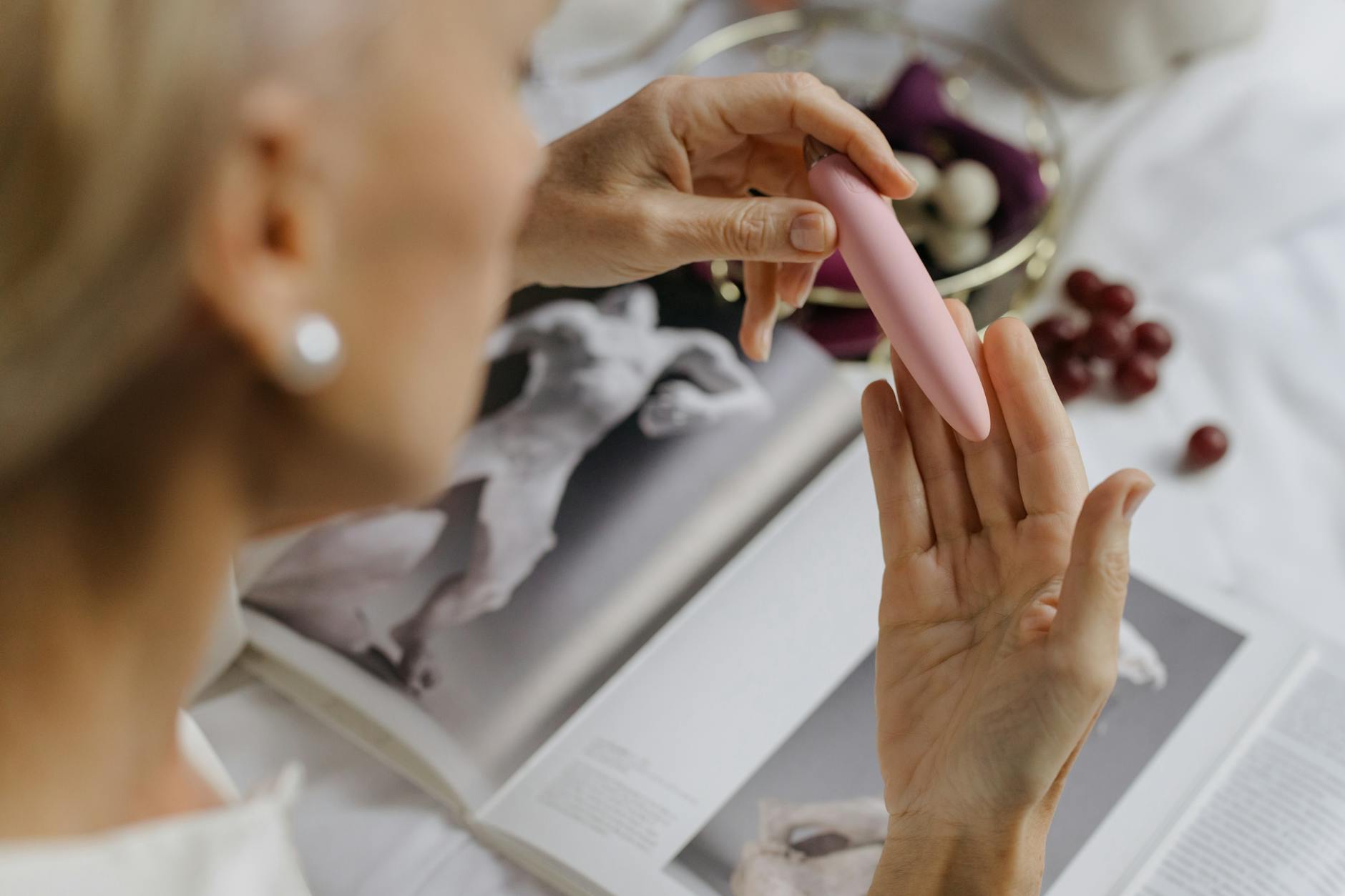
How to Use a Lemon Vibrator for Better Sensation When Touch Feels Numb or Distant
The numbness trap nobody talks about
You're being touched, but it barely registers. Your partner is trying, you're trying, and somewhere in the middle there's just... static. No spark, no sensation, no sense that anything's happening down there at all. It's like your body has gone quiet, and the volume knob is stuck.
This isn't broken. It's not permanent. And it's wildly more common than you think.
Numbness during sex happens for a bunch of overlapping reasons: stress, medication, hormonal shifts, disconnection from your body, or just years of touching that never quite landed right. The nervous system forgets what pleasure feels like. A clitoral vibrator, especially one with the right kind of stimulation, can actually retrain your nerves to respond again.
Why sensation goes numb in the first place
Your clitoris has 8,000 nerve endings. That's a lot of wiring, and all of it can get quieter when the conditions aren't right. Here's what usually causes the fade:
Stress and distraction. Your brain is the boss of pleasure. When you're running through your to-do list, worried about how you look, or anxious about whether anything will happen, your nervous system is in fight-or-flight mode. Touch stops registering because your brain isn't listening.
Medication side effects. SSRIs, blood pressure meds, and birth control can all dampen sensation. Your nerve endings still exist, but the signal doesn't travel the same way. It's not about broken wiring, it's about interference.
Repetitive touching that didn't work. If you've spent years with touch that felt fine but not exciting, your body learned to tune it out. The nervous system gets bored and stops paying attention.
Disconnection from your own body. This one's huge and often gets missed. If you're not really inside your body, if you're somewhere else in your head, your nervous system isn't active. You can't feel what you're not present for.
Hormonal quieting. Estrogen drops affect nerve sensitivity. So does pregnancy, postpartum recovery, and perimenopause. Your tissue might be thinner, your lubrication different, and your nerve endings genuinely less excitable.
The good news: none of these are permanent fixes. Sensation can come back. You just need the right setup to wake it up.
How vibration rewires numbness
Here's where a lemon clitoral vibrator becomes useful. Vibration works differently than friction or pressure. It's consistent, it's strong enough to cut through static, and it speaks a language your nervous system understands even when regular touch doesn't.
When you apply vibration to numb tissue, a few things happen:
The nerve endings get repeatedly stimulated in a very specific frequency. Your nervous system stops ignoring it and starts paying attention. It's like turning up the volume on something your brain had muted.
Your brain releases dopamine and oxytocin in response to that stimulation. That's the chemical basis of pleasure coming back online. You're literally retraining your nervous system to respond.
Because vibration is so consistent, your mind can relax into it. You're not waiting for the right pressure or the right angle. It's just there, same rhythm, over and over. That predictability lets your brain drop some of the control it's been holding and actually feel.
Unlike friction, vibration doesn't require your body to do anything. You don't have to match a rhythm, tense a certain way, or position yourself just right. You can literally just receive. And when you've been numb, just receiving is a massive thing.
The setup that matters most
You can have a great vibrator and still feel nothing if the conditions are wrong. Here's what actually moves the needle:
Start alone. This is not negotiable if you're rebuilding sensation. Your nervous system is still learning to pay attention. A partner watching, a worry about timing, or pressure to get aroused will shut it down. Solo exploration gives you permission to go as slow as you need.
Give yourself 30 minutes minimum. You're not trying to come fast. You're trying to wake something up. That takes time. Your nervous system needs a runway to get interested. Fifteen minutes in, things will start to shift.
Start with low intensity. A lemon vibrator usually has 6-8 patterns and intensity levels. Spend time on patterns 1 and 2. Let your body get used to the sensation before you turn it up. Numb tissue is often sensitive tissue too, which sounds backwards but is very real.
Find the angle that lands. The clitoris is not always where it seems. It's under a hood, it's a little different for everyone. Experiment with direct stimulation, side-angle stimulation, and stimulation through the hood. One angle will feel more electric than the others. That's your target.
Use lube even if you don't think you need it. Water-based lube reduces friction and actually helps sensation travel more efficiently. It also makes the whole experience less pressured and more gliding. Apply it and reapply as needed.
Turning numbness into sensation: a step-by-step practice
Here's a real protocol you can follow:
Session 1-3: Just noticing. Apply your lemon clitoral vibrator on the lowest setting to your vulva for 20-30 minutes. Don't expect anything. Don't try to come. Your only job is to notice what you feel. Tingling? Warmth? Pressure? Boredom? All valid. You're building a data set.
Session 4-7: Exploring patterns. Move through different patterns on low intensity. Spend 3-4 minutes on each one. Notice which ones feel closest to pleasant. Notice if sensation is starting to build. It might not feel like arousal yet. It might just feel like something is happening when before nothing was.
Session 8+: Intensity and intention. Once you've found a pattern that lands, spend time with it at slightly higher intensities. Start at level 3, move to level 4. Your nervous system is waking up. You might feel building sensation, actual arousal, the beginning of orgasm. You might not. Both are progress.
Between sessions, touch yourself with your hands. Not trying to get aroused, just remembering that sensation exists. A two-minute hand massage of your vulva does more for reconnection than you'd think.
When a partner is part of the equation
Once you've rebuilt some sensation solo, bringing a partner in is possible. But do it deliberately.
Start with you controlling the vibrator while your partner is present but passive. They're there for support, not participation. You get used to the sensation while they're watching. This might feel vulnerable. It should. That's the point.
Then move to your partner holding the vibrator while you guide them. Tell them when to move it, when to change the pattern, when to pause. You're directing it. They're executing. This keeps the power where your nervous system needs it while building reconnection.
The actual conversation before any of this happens matters more than the vibrator itself. "My body's been feeling kind of numb, and I want to rebuild that. This isn't about performance or getting off fast. It's about me relearning what pleasure feels like. I need things to be really slow and low-pressure." A partner who loves you will understand.
What else helps numbness besides vibration
A vibrator is a tool, not a magic fix. These things amplify what it can do:
Mindfulness or grounding work. Five minutes before any session, do a body scan. Notice where you're holding tension. Notice your breath. Come into your body on purpose. Apps like Insight Timer have meditations specifically for sexual wholeness.
Reducing the things that numb. If stress is the culprit, some stress reduction helps. If medication is the issue, talk to your doctor. If it's disconnection, the work is internal. But all of that happens parallel to using a vibrator, not instead of it.
Pelvic floor awareness. A very tight pelvic floor can block sensation. A very loose one can make it harder to feel pressure. Some people need pelvic floor physical therapy. It's not sexy, but it works.
Limiting porn and novelty-seeking. If you've been chasing increasingly intense stimulation, your baseline for what registers as pleasurable goes up. Pulling back from that and spending time with just one vibrator, one sensation, actually resets your nervous system's threshold.

Photo by Anna Shvets on Pexels
How long does this actually take
It depends on how deep the numbness runs. If it's situational (stress, medication, a specific relationship dynamic), you might feel real shifts in 3-4 weeks of consistent practice. If it's been years, it might take 2-3 months. Your nervous system isn't lazy, it's just been trained to stay quiet. Retraining takes repetition.
But most people notice something within the first two weeks. A slight tingle. A moment where they actually focus. A second where sensation landed instead of sliding past. Those micro-moments are real progress.
Common mistakes that keep sensation numb
Waiting for an orgasm to prove it's working. You can rebuild sensation without ever coming. Orgasm is a bonus, not the goal. If you're waiting for that, you'll miss all the smaller wins.
Jumping to high intensity too fast. It's tempting. You're numb, so you want the vibrator on level 7 right away. That usually just feels overwhelming and shuts things down further. Start low. Stay there for weeks if you need to.
Expecting partner touch to work the same as a vibrator. It won't, especially not at first. Hands are slower, less predictable, and require more presence from both people. Once your nervous system wakes up solo, then you can bring partner touch back in.
Being performance-focused. The second you start thinking about getting hard, coming, or looking a certain way, you've left your body. You're in your head now. The whole point is to be in your body, boring as that sounds.
When to bring in extra support
If numbness is tied to trauma, a sex therapist can help. If it's a medication issue, your doctor needs to know. If it's relationship disconnection, a couples counselor makes sense. A vibrator is a tool. Sometimes you need the tool plus the expert.
But in most cases, patience, the right setup, and a lemon clitoral vibrator that actually works can bring sensation back. Your nervous system wants to feel. You just have to remind it how.
FAQs: Sensation, numbness, and rebuilding pleasure
How can I tell if my numbness is physical or mental?
Honestly? It's usually both. But if you notice numbness only during partnered sex and not during solo exploration, that's mental (anxiety, pressure, disconnection). If it's there no matter what, that's probably physical or medication-related. Either way, a vibrator helps. The kind of numbness doesn't change the protocol.
Is numbness a sign that something is wrong with my body?
Not necessarily. Numbness is usually a symptom, not a diagnosis. Your body might be responding exactly as it should to stress, hormones, medication, or how you've been touched. That's not broken, it's adaptive. And adaptive can shift.
Can a partner's touch bring sensation back, or does it have to be solo exploration?
Solo exploration usually comes first because there's zero pressure. But once you've rebuilt some sensation alone, partner touch absolutely helps deepen it. The key is doing the solo work first so your nervous system has a clean space to learn.
What if I try this for weeks and nothing changes?
Then you might have something medical going on (nerve damage, severe medication side effects, chronic pain condition) that needs specialist attention. A gynecologist or pelvic pain specialist can run tests and rule out physical causes. That's not failure, that's just knowing when to call in backup.
Is it normal for sensation to come back unevenly?
Completely. You might feel your outer vulva wake up before your inner clitoris. You might have days where sensation is better than others. You might notice that certain patterns work better than others. All of that is your nervous system rebooting. Just keep going.
Can I use a lemon vibrator if I'm taking antidepressants that numb sensation?
Yes. A lemon clitoral vibrator actually works better on medication-numbness than hand stimulation because the vibration frequency can cut through the chemical dampening. The numbness won't fully go away until the medication side effect does, but you can definitely rebuild responsiveness in the meantime. Talk to your doctor about timing and whether the medication is right for you.
You're not numb forever
Sensation comes back. It might take longer than you'd like. It might feel awkward. You might need to be patient with yourself in a way that feels annoying right now. But numbness is not your new baseline. It's just where you are today.
Start with one slow session. Notice what you feel, even if it's barely anything. Show up again tomorrow. Your nervous system is listening. It's just waiting for the volume to come back up.
Want to talk through what might work best for your specific situation? Reach out at /contact and let's figure it out together.