
The shift nobody warns you about
You started birth control and suddenly orgasms feel harder to reach. Or they feel less intense. Or you're not sure what changed exactly, just that something did. That's not in your head, and you're not broken.
Hormonal birth control works by suppressing your natural hormone fluctuations. That stability is the whole point. But your body has spent years building arousal patterns around cyclical changes in estrogen and testosterone. When those swings disappear, pleasure doesn't vanish. It recalibrates. And most people get zero guidance on how to navigate that shift.
Here's what actually happens, and why a lemon vibrator can be the bridge back to intense sensation.
What birth control does to sensation
The science is straightforward. Hormonal birth control suppresses estrogen spikes and keeps testosterone steady at a lower baseline than you'd experience naturally. Both of these matter for pleasure.
Estrogen affects tissue blood flow, lubrication, and how quickly arousal builds. Lower, steadier estrogen means less dramatic physiological arousal response. You might notice it takes longer to lubricate, or that arousal feels flatter. It's not progressive anymore.
Testosterone drives desire and genital sensitivity. On birth control, many people experience a measurable decrease in libido and in clitoral sensation. The clitoris has tons of testosterone receptors, so this is real and worth taking seriously.
Here's the part that matters: none of this means you've lost the capacity for orgasm. Your body hasn't changed its fundamental wiring. The chain reaction that creates pleasure is still intact. You just need a different route to trigger it.
Why lemon clitoral vibrators work differently
Traditional vibrators rely on frequency. They buzz, and your nerve endings respond to that repetition. That works great when your natural arousal is running high and your tissues are engorged. When they're not, vibration can feel generic. Numb.
Lemon suction technology works by a completely different mechanism. Instead of vibration, it creates rhythmic pressure changes that stimulate the thousands of nerve endings in and around your clitoris. It doesn't require the same depth of tissue engorgement to feel intense.
In practical terms: you can reach powerful sensation faster, with less warm-up time, even when your baseline hormone levels are suppressing your natural response. The lem vibrator technology mimics the stimulation of oral sex, which works through suction and pressure, not buzz frequency.
For people on hormonal birth control, this isn't a luxury upgrade. It's often the difference between an hour of effort and ten minutes of real pleasure.
How to recalibrate your technique
The mistake most people make is trying to use a lemon vibrator the same way they used their last device. That doesn't work because you're starting from a different baseline.
Start with pattern one or two. Birth control flattens your natural arousal, which means your clitoris is more sensitive to overstimulation. The intensity that used to feel perfect might be too much. On a lemon clitoral vibrator, begin at the lowest suction setting. You can build up. You can't un-ring that bell.
Lengthen your warm-up. Expect fifteen to twenty minutes instead of ten. Your body needs time to build toward sensation. This isn't failure. This is your new normal on birth control, and it's worth protecting that time.
Use lube every time. Birth control reduces natural lubrication. A water-based lube isn't optional. It changes the way the lemon suction device feels against your tissue. It's the difference between friction and glide.
Focus on building, not jumping. Your arousal arc is flatter on birth control. That means you can't spike from zero to orgasm. You have to layer sensation. Start with the vibrator at pattern one. Spend a few minutes there. Then move to pattern two. Let each stage develop for a moment before you escalate.
Many people find that external stimulation with a lemon vibrator, combined with internal touch from a partner, creates the compound sensation they need. Birth control doesn't stop you from having internal sensation. It just means external stimulation becomes even more important.
The partner conversation you might need
If you're with someone, they might notice the change too. The worst thing you can do is hide it and blame yourself. The best thing you can do is be honest: "My body is responding differently on this birth control. Here's what feels good now."
That conversation isn't a problem to solve. It's a door to renegotiate pleasure together. You might discover that how to use a lemon vibrator for deeper pleasure building with your partner opens up new territory. Many couples find that when someone's pleasure becomes more effortful, the collaboration gets more deliberate. And more satisfying.
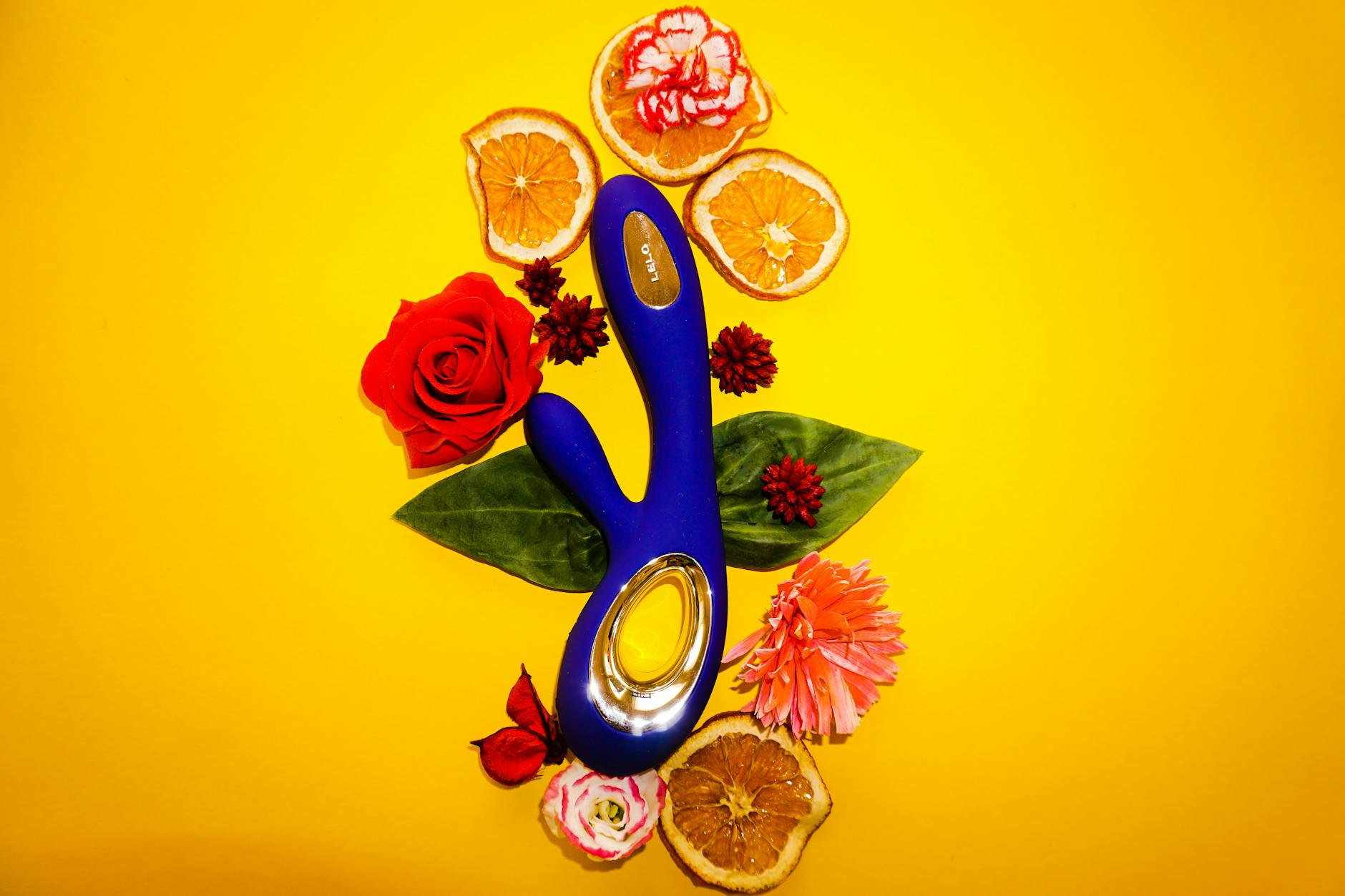
Photo by FounderTips on Pexels
When to switch birth control (and when not to)
Let's be clear: using a lemon clitoral vibrator is not a reason to stop birth control that's working for you medically. Sexual pleasure is important, but so is not getting pregnant if that's not your goal.
But if your pleasure has completely flatlined and you were on a pill, patch, or ring with consistent hormone dosing, it's worth asking your doctor about switching formulations. Some people tolerate lower-dose pills better. Some do better on methods that give them a weekly hormone break. That's a clinical conversation, not a pleasure hack.
If switching isn't realistic or you want to stay on your current method, a lemon sucker device is specifically designed for this exact situation. It's a tool that meets your body where it is.
The role of consistency
One thing I see with birth control and pleasure is that people expect intensity to stay constant. It won't. On hormonal contraceptives, your sensation might actually have micro-fluctuations tied to your pill-free week or placebo week, even though you're not ovulating.
Some days the lemon vibrator will feel incredibly responsive. Other days it'll feel flatter. That's not the device. That's your body's lingering hormonal rhythm. When you know this is coming, you stop taking it personally.
Keep a note of when things feel easiest. You might find a pattern. Some people find their sensitivity peaks during their pill-free week, even on birth control. Others find it stays pretty consistent. Knowing your body's microrhythm lets you plan for pleasure when conditions are optimal.
Addressing decreased libido
Sensation and desire are not the same thing. Orgasm capacity and wanting sex are different. Birth control can hammer desire in a way that doesn't fully respond to a better vibrator.
If your libido has cratered, a lemon vibrator won't fix that alone. This is worth discussing with a doctor. Sometimes switching methods helps. Sometimes adding back a small amount of testosterone helps (and yes, that's an option even on birth control in some cases). Sometimes it's the birth control plus stress plus life all converging at once.
But here's what a lemon clitoral vibrator can do even in low-desire situations: it can be a low-friction way to engage your body. You don't have to feel like having sex to use it. You can use it as a meditation, or pure sensation, or just to check in with your pleasure capacity. Often, feeling pleasure in your body restarts the desire conversation.
The timeline for adjustment
Your body doesn't shift overnight, and neither does your pleasure baseline. If you just started birth control or switched methods, give yourself three months before deciding that pleasure is permanently changed. Your body is still adapting.
But if you've been on your current method for six months or longer and pleasure has flatlined, it's not going to self-correct. You need a new tool or a new method. A lemon vibrator is an excellent tool. It's been designed for exactly this: creating intense sensation when your hormones are working against you.
A quick reality check
Birth control is one of the most important medical innovations for people with vulvas. If it's right for your fertility goals, the orgasm adjustment is worth it. And using a tool like a lemon suction vibrator makes that adjustment way easier than it has to be.
Your pleasure matters even when it's inconvenient. Even when it requires you to be intentional. Even when it means learning new technique. Taking the time to rebuild your pleasure life on birth control is not self-indulgent. It's maintenance.
FAQs
Why does birth control make orgasms harder to achieve?
Hormonal birth control suppresses the natural fluctuation of estrogen and testosterone, keeping both hormones at a lower, steadier baseline. Both estrogen and testosterone drive genital blood flow, sensitivity, and desire. Lower levels mean arousal takes longer to build and may feel less intense. This is physiological, not psychological, and you're not doing anything wrong.
Can I still have orgasms on birth control?
Absolutely. Your orgasm capacity hasn't changed. Your nerve endings are intact. Your brain's pleasure centers are intact. What's changed is the speed and effort required to reach that sensation. A lemon vibrator works around this by creating intense stimulation without relying on natural arousal to set the stage.
Should I switch birth control if my orgasms feel different?
Not automatically. Pleasure changes are worth addressing, but switching birth control just for that reason is a bigger decision than using a better tool. Talk to your doctor about whether a different formulation might be worth trying, but know that a lemon clitoral vibrator can bridge the gap while you're on a method that's working medically.
How long does it take to adjust to orgasms feeling different on birth control?
Your body adapts to hormonal birth control in about three months. If pleasure feels off after three months, it's not going to spontaneously improve. That's when to invest in technique adjustments, lube, longer warm-up time, and tools like the lem vibrator that work with your current hormone state rather than against it.
Does the lemon vibrator feel different than a regular vibrator on birth control?
Yes, significantly. Suction-based stimulation (what a lemon vibrator creates) doesn't rely as heavily on deep tissue engorgement to feel intense. Traditional vibrators work best when your natural arousal is already running high. On birth control, when baseline arousal is suppressed, suction technology often feels more responsive and intense than buzz-based vibration.
Can my partner help me have better orgasms on birth control?
Definitely. Many people find that combining external lemon vibrator stimulation with internal touch from a partner creates the layered sensation needed to reach orgasm when hormones are suppressed. The key is communication about what feels good now, not what used to feel good. That conversation itself often improves intimacy.
You deserve pleasure on your own terms
Birth control is a choice you made for your body and your future. The adjustment in pleasure is real, and it's worth acknowledging without shame. Using a lemon vibrator isn't a workaround for a problem. It's a tool that works brilliantly for the specific physiological reality of hormone suppression.
Many people find that once they accept the new baseline, optimize their technique, and invest in tools designed for this exact situation, their pleasure becomes more intentional and sometimes more satisfying than it was before. That's not consolation. That's possibility.
If you want to dive deeper into how your body and pleasure interact with medication and hormones, reach out to us or explore more of our guides on pleasure during life transitions.