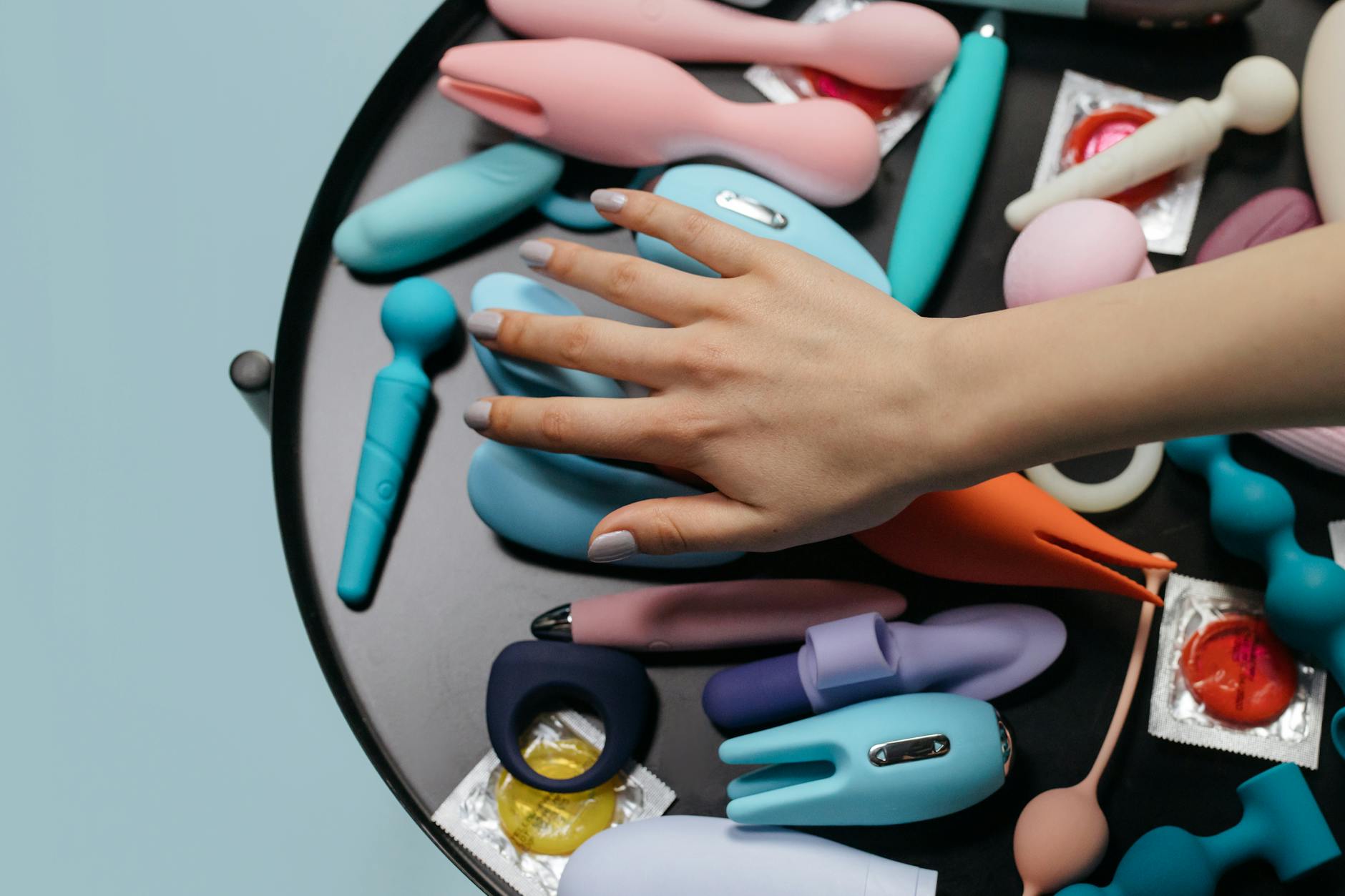
Here's what actually happens in perimenopause
Let's be real: perimenopause is not a switch flip. It's a dimmer switch that moves for about five to ten years, and the light flickers unpredictably along the way. One week your arousal builds in five minutes like always. The next week it takes thirty minutes and feels sideways. Your body is producing wildly fluctuating amounts of estrogen and progesterone, which changes blood flow to your genitals, shifts neural sensitivity, and rewires the whole chemical conversation your brain and body usually have about desire.
The worst part isn't the changes themselves. It's that nobody tells you arousal patterns will change mid-experience, sometimes multiple times per month. You're not broken. Your lemon vibrator didn't stop working. Your body is speaking a new language, and you haven't learned it yet.
Why arousal timing shifts during perimenopause
During your reproductive years, estrogen follows a rhythm. Your brain knows what to expect. Arousal builds in a relatively predictable timeline because the hormonal foundation is stable. Perimenopause flips that script. Estrogen spikes and crashes randomly. Some months it's lower than it will be in menopause. Other months it spikes above anything you've experienced in years.
Here's what shifts physiologically:
Blood flow changes. Estrogen keeps the blood vessels in your genitals flexible and responsive. When estrogen dips unexpectedly, blood can't rush to the clitoris as quickly. Arousal takes longer to register physically even when your mind is completely ready.
Neural sensitivity fluctuates. The same lemon vibrator pattern that felt perfect last week might feel too intense or oddly muted this week. This isn't psychological — it's real tissue sensitivity changing with hormone levels.
Lubrication becomes unreliable. Some days you have plenty of natural lubrication. Other days cervical fluid patterns shift and you need extra support. Perimenopause doesn't announce these changes in advance.
The refractory period lengthens. After orgasm, it takes longer to return to arousal during certain phases of your cycle. This is normal but often comes as a shock if it never happened before.
The arousal timeline during different perimenopause phases
Your cycle doesn't disappear during perimenopause. It gets weird. Understanding where you are in it helps explain why your lemon clitoral vibrator experience changes week to week.
In the follicular phase (roughly the first half, when estrogen is rising), arousal often returns to something closer to your baseline. You might feel faster response, higher sensitivity, and easier access to orgasm. This is when you might use your lemon vibrator on higher patterns and shorten your warm-up time.
During ovulation, if it's happening that month, estrogen peaks. This is often your personal arousal sweet spot. Your body feels most responsive. Sensation feels sharp and efficient. Many people find their most intense orgasms during this window.
In the luteal phase (roughly the second half), progesterone rises while estrogen dips and rises again. This is when arousal becomes least predictable. One day you feel ready. The next day nothing lands. Your lemon vibrator might need lower patterns, longer warm-up, or extra lubrication. Some people need to switch to clitoral vibrators designed for longer, broader stimulation rather than precision patterns.
Then comes the anovulatory cycle, where ovulation doesn't happen that month at all. Estrogen and progesterone levels stay relatively low and flat. Many people report that arousal feels most muted during these cycles. Pleasure is still absolutely possible, but you're usually working with less natural lubrication, slower blood flow, and more diffuse sensitivity.
How to adjust your lemon vibrator use across these changes
Honestly though, trying to time everything perfectly will drive you insane. Here's what actually works: learn to read your body's signals in the moment and adjust your approach on the fly.
During high-estrogen phases. Use your lemon clitoral vibrator exactly as you normally would. Start at pattern 1 or 2 and work up. Most people can reach orgasm faster during these windows. You might discover that patterns you previously found overwhelming now feel perfect. Higher patterns become accessible. Shorter warm-up windows feel normal again.
During low-estrogen phases. This is where a lemon vibrator's air-suction technology really shines. Instead of relying on direct friction that can feel too intense on less-lubricated tissue, suction stimulates the clitoral nerves through the skin without grinding pressure. Start lower and slower. Budget 20-30 minutes instead of 10. Use water-based lubricant even if you typically produce enough natural lubrication. Consider lower patterns and longer sessions.
During unpredictable weeks. Check in with your body before starting. How does direct touch feel? If it feels tender, lean into lighter suction patterns on your lemon clitoral vibrator. If it feels numb, you might need more intensity than usual. If you're unsure, start at pattern 1 and literally ask yourself after two minutes: is this working or should I shift? Your body will tell you.
Lubrication is your friend now. Water-based lubricant isn't optional during perimenopause the way it was before. Use it. Use more than feels necessary. It makes every pattern more pleasant and protects tissue that's cycling through different estrogen levels. A lemon sucker or any clitoral vibrator works better, feels better, and delivers more consistent sensation when there's adequate lubrication.
The psychological layer nobody mentions
Here's the thing that derails more people than the physical changes: you're grieving the predictability you used to have. For twenty or thirty years, your body worked a certain way. You understood it. You could count on it. Perimenopause takes that away.
Some days you'll try to use your lemon vibrator and nothing will happen. You'll feel frustrated or broken. You're neither. Your body is just operating under different chemistry this week. When you can separate "my body is responding differently than it used to" from "something is wrong with me," everything shifts. Your lemon clitoral vibrator becomes a tool for exploration instead of a test you're passing or failing.
Many people also discover that the mental permission to experiment actually improves pleasure. During perimenopause, you often stop trying to have sex at the exact same times or in the exact same ways. You start checking in more. You get more curious. You ask yourself what you actually want instead of what you think should work. A lemon vibrator in this context becomes less about achieving orgasm and more about learning what your changing body enjoys right now.
When to talk to a doctor
If arousal changes are accompanied by vaginal dryness that doesn't improve with lubrication, or if you're experiencing significant pain, see a gynecologist. Genitourinary syndrome isn't inevitable, and topical treatments work fast. If hot flashes or mood swings are tanking your desire, those are also worth mentioning to your healthcare provider — they're symptoms that sometimes respond to targeted support.
If your cycles have completely stopped for twelve consecutive months, you've officially moved from perimenopause into menopause. Everything you've learned about managing arousal changes still applies, but the unpredictability often decreases because your hormones settle into their new baseline.
The part that gets easier
Right now, during perimenopause, the novelty of your body's changes can feel exhausting. You're constantly adjusting. But here's what I've seen with hundreds of people: by the time they move through perimenopause into menopause, they understand their arousal patterns more deeply than they ever did before. They know what they actually enjoy. They've tried different lemon clitoral vibrators, different patterns, different lubrication strategies. They've stopped apologizing for needing more time or different stimulation.
Your lemon vibrator is built for exactly this phase of your life. Air-suction technology adapts to changing sensitivity. Lower patterns work when you need gentleness. Higher patterns deliver when you need intensity. You can change patterns mid-session when your body signals that it needs something different. That flexibility is everything.
Arousal during perimenopause doesn't disappear. It transforms. Your job is not to force your body back into its old pattern. It's to learn what this new version wants and give it exactly that.
FAQs
Why does my lemon vibrator feel too intense some weeks and too subtle other weeks?
Hormone fluctuations during perimenopause directly affect clitoral sensitivity and tissue thickness. During high-estrogen phases, tissue is plumper and blood flow is stronger, making the same stimulation feel sharper. During low-estrogen phases, tissue thins and sensitivity diffuses. The vibrator hasn't changed. Your neurological response has. This is completely normal and reversible week to week. Using lower patterns and adding extra lubrication helps during sensitive periods.
Can I still use my lemon clitoral vibrator if my natural lubrication is inconsistent?
Absolutely. In fact, water-based lubricant becomes more essential during perimenopause, not less. Using it protects tissue, improves sensation consistency, and makes every pattern feel better. Don't view lubrication as a sign something's wrong. View it as one of your tools, like the vibrator itself. Applied generously, it solves most inconsistency problems.
How long should I warm up with my lemon vibrator during perimenopause?
It depends where you are in your cycle. During high-estrogen phases, five to ten minutes might be enough. During low-estrogen phases, plan for 20-30 minutes. The safest approach: start at pattern 1 and give yourself at least fifteen minutes. Let your body tell you when it's ready for more intensity. Rushing makes perimenopause harder, not easier.
Is decreased arousal during perimenopause permanent?
No. Arousal doesn't disappear during perimenopause. It becomes less predictable and sometimes slower to build. Most people find that once they move into menopause and hormones stabilize, arousal patterns become more consistent again, though different from reproductive years. Many report better pleasure than they had before because they understand their bodies more deeply.
Should I try a different clitoral vibrator during perimenopause or stick with what I have?
If your current lemon vibrator is working across different phases, keep it. The air-suction design adapts well to hormonal changes. If you're struggling, consider whether the issue is the tool or your approach (timing, lubrication, pattern selection). That said, some people find that having two clitoral vibrators in their rotation helps. One for high-sensitivity phases and one for lower-sensitivity phases. Shop Lemon Sex Toys makes options that work across different needs.
Can my partner help navigate arousal changes during perimenopause?
Yes, enormously. The conversation should be straightforward: "My body is responding differently right now due to hormonal changes. Here's what helps." When you can name what's happening without shame, your partner can support it. They can offer longer foreplay, help apply lubrication, or simply understand why you need different stimulation than you did last month. The vulnerability often creates closer connection.
Will my lemon vibrator still work after menopause?
Completely. In fact, many people find that clitoral vibrators work beautifully during menopause because they don't require the kind of direct friction that can irritate thinner tissue. The air-suction design of lemon vibrators is particularly gentle and effective for post-menopausal bodies. Your vibrator isn't a temporary tool. It's an investment in pleasure across decades.
Moving forward
Perimenopause is asking you to pay attention to your body in a way you maybe haven't since adolescence. That's inconvenient. It's also powerful. You're learning what you actually want, not what you think should work. Your lemon vibrator is here for all of it. Start where you are, adjust as needed, and trust that your body knows what it's doing even when it feels unpredictable.
If you're navigating this transition and feeling lost, you don't have to figure it out alone. Reach out to Shop Lemon Sex Toys — we're here to help you find tools and information that fit your actual life, not your life from five years ago.