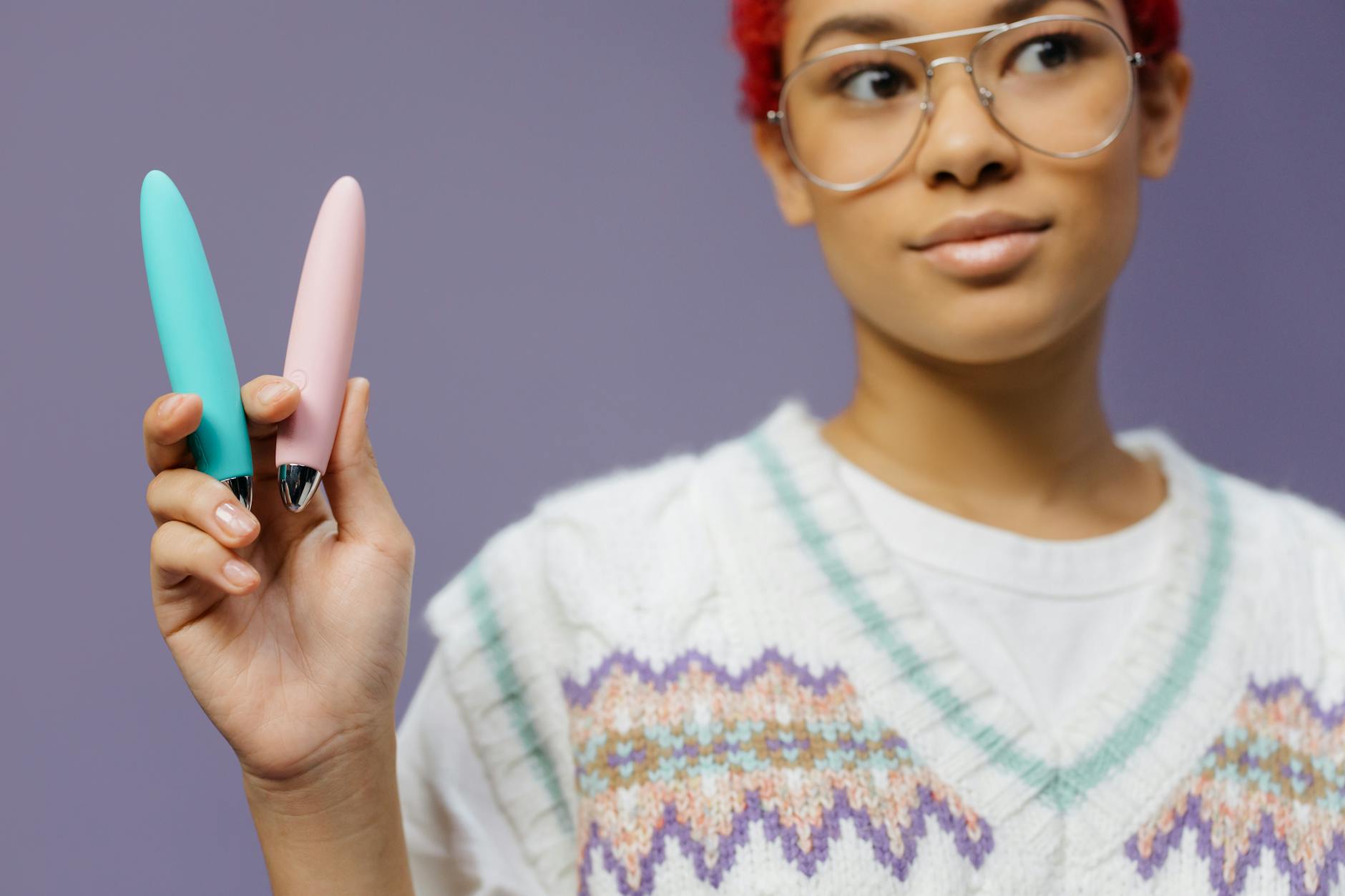
Let's talk about what hormonal changes actually do to your sex life
Your body didn't break. But hormonal shifts—whether from birth control changes, pregnancy recovery, thyroid treatment, or perimenopause—absolutely rewire arousal. Sensation changes. Timing shifts. The speed at which your nervous system goes from zero to ready takes longer, or sometimes shorter, or feels completely different than it used to. This is not your imagination, and it's not permanent. It's a recalibration.
The problem is that most people treat hormonal arousal changes like they're a bug rather than a feature. You keep expecting your body to work like it used to, get frustrated when it doesn't, and then assume something is broken. That's backwards. You're not broken. You're just introducing yourself to your body again.
I work with couples navigating this every week. The ones who do best aren't the ones who push through or ignore the shift. They're the ones who get curious. They treat it like exploration rather than troubleshooting. And usually, that curiosity pays off in ways they didn't expect.
What hormones actually control about arousal
Here's what changes when hormones shift: the speed of blood flow to your genitals, the sensitivity of nerve endings, the thickness of vaginal tissue, and how your brain prioritizes sexual signals over background noise. Here's what stays the same: your capacity for pleasure, your clitoral structure, your ability to orgasm.
I mention this because most people conflate "my arousal feels different" with "I can't feel aroused anymore." One is true. The other usually isn't. The difference matters.
When estrogen fluctuates, your clitoris becomes slightly less engorged during arousal. For some people, this means sensitivity increases because the tissue is less swollen and more responsive. For others, it means directness feels sharper and they need a broader, more distributed kind of stimulation. This is where a lemon clitoral vibrator actually has an advantage over other toys: air-suction technology gives you clitoral stimulation without requiring the same direct pressure point contact.
Testosterone levels also shift with hormonal changes. This hormone contributes to spontaneous desire in everyone with a vulva, not just those without ovaries. A drop in testosterone doesn't stop orgasm capacity. It usually means desire takes longer to build and needs more context or mental engagement to spark.
The timing problem (and why it's easier to solve than you think)
One of the most common complaints I hear after hormonal changes is "I used to get turned on in five minutes. Now it takes thirty." Fair. It also used to take fifteen, and you didn't notice because the speed felt normal to you. Now that it's shifted, thirty feels broken.
Let me be direct: the solution is not fighting the new timeline. The solution is building it into your routine.
If arousal takes longer, you need foreplay that doesn't feel like a sales pitch. You need 20 to 30 minutes minimum of something that feels good, not something you're "enduring" to get to the main event. This might mean solo exploration with a lemon vibrator for 15 minutes before partnered time. Or it might mean your partner touches you while you're both reading, or you listen to something that engages you mentally, or you take a shower together.
The actual key: build in unrushed time. The second you know arousal takes longer, structure your life around that instead of resenting it. Most couples who do this tell me the quality of what happens next actually improves, because there's less desperation and more genuine connection.
Sensation mapping: what you need to know
After hormonal changes, your sensitivity map might shift. The place on your clitoris that drove you wild before might feel too intense now. The sides might be way more responsive. The internal angle (the part closer to your body) might wake up in a way it didn't before.
This is where self-exploration becomes genuinely valuable. Not for therapy purposes. For practical navigation.
I recommend spending time alone with a vibrator on low or medium settings, paying attention to what feels good where. This isn't a performance. You're just gathering information. Try different parts of the clitoris. Try different patterns. Notice if you need more pressure or less. Notice if you want motion or steady sensation.
Once you've mapped your own body, you can either teach a partner where to focus or use a lemon vibrator solo with actual knowledge of what works. Many of my clients say this mapping phase actually reconnects them with pleasure in a way they hadn't expected.
The role of mental engagement post-hormone shift
Here's something that often surprises people: hormonal changes don't just affect your body. They affect your brain's ability to tune out distraction and focus on sensation. Lower estrogen often means your attention is harder to hold in one place. Your nervous system might be noisier.
This is why partnered sex sometimes feels harder post-hormone shift, even when solo pleasure still works. Your brain needs either more mental engagement or fewer distractions to reach the same depth.
What helps: reducing friction before sex starts. Put your phone in another room. Light a candle if that helps you shift into focus mode. Have conversation or eye contact that actually engages you—not a performance. If you're using a lemon clitoral vibrator solo, pick a setting and pattern ahead of time instead of fidgeting through options while you're trying to stay present.
The goal is attention, not achievement. Once your nervous system gets enough of your own attention, the physical response usually catches up.
Communication with partners (the actual non-negotiable)
If you're rebuilding intimacy with a partner after hormonal changes, this part is not optional.
You need to tell them: "My body is responding differently now. It's not about you. It's not permanent. But for the next while, I need things to be slower / more focused / different." Then you need to mean that and not turn it into an apology.
What doesn't work: waiting for your partner to notice the change and adapt. What works: being clear that this is a joint recalibration, not a personal rejection.
Some couples find that using a lemon vibrator together changes this dynamic entirely. There's no performance pressure if the vibrator is doing part of the work. There's less desperation if you both know arousal is a 25-minute process instead of a five-minute one. You can focus on touch and connection instead of outcome.
When to expect the shift to stabilize
Depending on what caused the hormonal change, your body usually settles into a new baseline within 2 to 6 months. This doesn't mean sensation stays the same forever. It means your system adjusts and finds its own rhythm again.
What I tell my clients: don't assume this is forever right now. Give yourself permission to explore, to use toys you might not have before, to ask for things you haven't asked for, to move slower than you used to. Most of the time, 3 months in, you'll understand your new body pretty well.
FAQ
Can a lemon vibrator help with arousal that's taking longer after hormonal changes?
Yes. A lemon clitoral vibrator provides consistent stimulation that helps trigger arousal without requiring the same manual engagement. This matters when your nervous system needs a bit more help focusing. Air-suction technology also means you get broad, distributed stimulation rather than sharp point contact, which many people find easier to build arousal with when hormones have shifted.
Should I use a vibrator solo or with a partner if my arousal is changing?
Both. Solo time helps you understand your new body without performance pressure. That knowledge makes partnered time better because you know what actually works. Start solo, get comfortable with the sensations and timing, then bring that clarity into partnered exploration.
How long does it usually take for arousal to feel normal again after hormonal changes?
Typically 2 to 6 months for your body to settle into a new baseline. This doesn't mean sensation stays exactly the same—hormones aren't static. It means you've adjusted and understand what your body needs now. Some people find their arousal actually feels better post-adjustment because they've had to get intentional about pleasure.
Does hormonal birth control affect pleasure the same way as hormonal health changes?
No. Birth control is an external hormone exposure you control, while natural hormonal shifts (perimenopause, postpartum, thyroid treatment) are systemic. That said, sensitivity changes happen with both. The principle is the same: give your body time to adjust and explore what feels good now rather than fighting the change.
Is it normal to feel disconnected from pleasure during hormonal shifts?
Completely normal. Hormones affect dopamine, oxytocin, and sensation all at once. Disconnection is your nervous system adjusting, not a sign that pleasure is gone. Usually, reconnection happens through solo exploration—pressure-free time with a lemon vibrator, self-touch, or mental engagement. Partner pressure actually delays this.
What if hormonal changes made me sensitive to direct clitoral stimulation?
Many people find that after hormonal shifts, their clitoris becomes more sensitive to direct pressure. This doesn't mean vibration is off-limits—it means you might need lower settings, broader stimulation (like air-suction tech), or stimulation on the sides and internal angle instead of the glans. How to Use a Lemon Vibrator When Clitoral Stimulation Feels Too Intense breaks down exactly how to adjust.
Rebuilding is not starting over
Hormonal changes shift your experience of arousal, but they don't erase your capacity for it. What changes is the map. The destination is still there.
Most of the couples I work with find that rebuilding intimacy after hormonal shifts actually makes their sex life richer, because they've had to get intentional about it. They've had to communicate. They've had to slow down and notice what feels good instead of defaulting to what used to work. That's not a loss. That's a gift wrapped in inconvenience.
If you're navigating hormonal changes and want to talk through what's happening with your body or your relationship, reach out. I'm here.
Sources
- Harvard Health Publishing. "Hormonal Changes and Sexual Desire." Accessed 2026.
- American College of Obstetricians and Gynecologists. "Understanding Hormonal Fluctuations and Sexual Function."
- Goldstein, I., et al. "Women's Sexual Function and Dysfunction: Study, Diagnosis and Treatment." The Journal of Sexual Medicine, 2005.