
Let's be real about numbness
Your body used to respond. A touch, a look, a thought. Then something shifted. Now you can feel contact, sure, but it doesn't translate into arousal. You're touching yourself or your partner is touching you, and it feels like reading a grocery list. The circuit that connects sensation to desire has gone quiet.
This isn't broken. It's not permanent. But it does need a different signal to wake up.
Why touch alone stops working
Touch is a conversation between your skin, your nerves, and your brain. When numbness hits, the problem is almost never the skin. It's usually one of three things happening in the nervous system itself.
Sustained stress flat-lines arousal. When you're living in fight-or-flight mode, your parasympathetic nervous system (the one that handles pleasure) basically clocks out. You can be touched intimately and your body registers it as just another sensation competing for attention. Your brain is still running the mortgage math or the work email or the argument from yesterday.
Medications numb everything equally. SSRIs, blood pressure meds, hormonal birth control. These can blunt sensation across the board. You're not imagining it. The nerve endings aren't firing the same way. A gentle touch might literally register at 40% of its former intensity.
Age changes the sensitivity threshold. Nerve density doesn't decrease much, but blood flow to the clitoris does. So does the speed at which sensory signals travel. Everything still works, but arousal takes longer to build and requires a stronger initial signal to get there.
In all three cases, the solution is the same. You need a stimulus strong enough to cut through the noise.
How vibration breaks through numbness differently
Vibration works because it's not subtle. A vibrator creates a rapid, rhythmic signal that your nervous system can't ignore or deprioritize. It's like the difference between someone whispering in a crowded room and someone tapping you on the shoulder repeatedly.
When you use a clitoral vibrator, you're not replacing touch. You're amplifying the signal. The vibration pattern triggers a neurological response that manual stimulation alone might not, especially when sensation has flatlined.
For people on antidepressants, vibration often works when hand stimulation doesn't. The theory is that while SSRIs dampen all sensation, they don't dampen rapid mechanical stimulation the same way they dampen slower touch. You're essentially finding the bandwidth that still works.
For people dealing with stress-related numbness, a vibrator gives the body permission to shift gears. It's a strong enough signal that your brain can't process it as "another task" or "something you should optimize." Your nervous system has to actually respond.
The pattern matters more than the power
Here's what most people get wrong about vibrators and numbness. They assume stronger vibration = better results. Usually the opposite is true.
When sensation is numb, starting at high intensity can actually backfire. It becomes overwhelming without being pleasurable. What works better is starting low and building rhythm. Most clitoral vibrators, including the Lemon, have pattern options that let you dial in what actually registers. Pattern 1 or 2, building slowly, often unlocks sensation before patterns 3, 4, or 5 do.
The consistency of the pattern also matters. A steady rhythm gives your nervous system a predictable signal to lock onto. That predictability is actually what allows arousal to build. It's not chaos. It's information your body can use.
Another thing that helps. Most vibrators designed specifically for clitoral stimulation use suction or gentle pulsing rather than jackhammer intensity. These patterns mimic the way sensation actually builds naturally, just with a louder signal. They're not fighting your body's physiology. They're just turning up the volume.
Why lemon vibrators specifically
Clitoral vibrators like the Lemon are designed around clitoral anatomy and the patterns that actually produce results. The shape and suction mechanism mean you're stimulating the right area without overwhelming the surrounding tissue. For people dealing with numbness or hypersensitivity, this precision matters.
The Lemon uses air-suction technology that creates a gentler overall sensation than traditional vibration, but a more targeted one. If your numbness is also accompanied by sensitivity issues, this approach often works better than a standard vibrator.
Lemon vibrators come with multiple pattern options. This lets you experiment. You might find that Pattern 1 works for building initial arousal when nothing else does. Or that Pattern 2 gets you from responsive to actually aroused. Testing different patterns is part of the process, and most lemon sexual toys make this easy to do.
The mindset shift that actually helps
Using a vibrator when sensation has gone numb requires a small permission slip. Not as a sign that something is wrong with you. But as a tool for waking up a system that's temporarily offline.
I work with a lot of people (especially women) who've internalized the idea that if you need a vibrator, your body has failed somehow. The opposite is true. Your body is giving you useful information. It's saying "this signal isn't getting through." A vibrator is the answer.
For couples navigating this, the most important conversation isn't about the vibrator itself. It's about what numbness actually means. It's not typically a sign that attraction has faded or that your relationship is in trouble. Usually it's a sign that one or both partners are stressed, medicated, or experiencing age-related changes that require a different kind of stimulation. Naming that distinction changes everything.
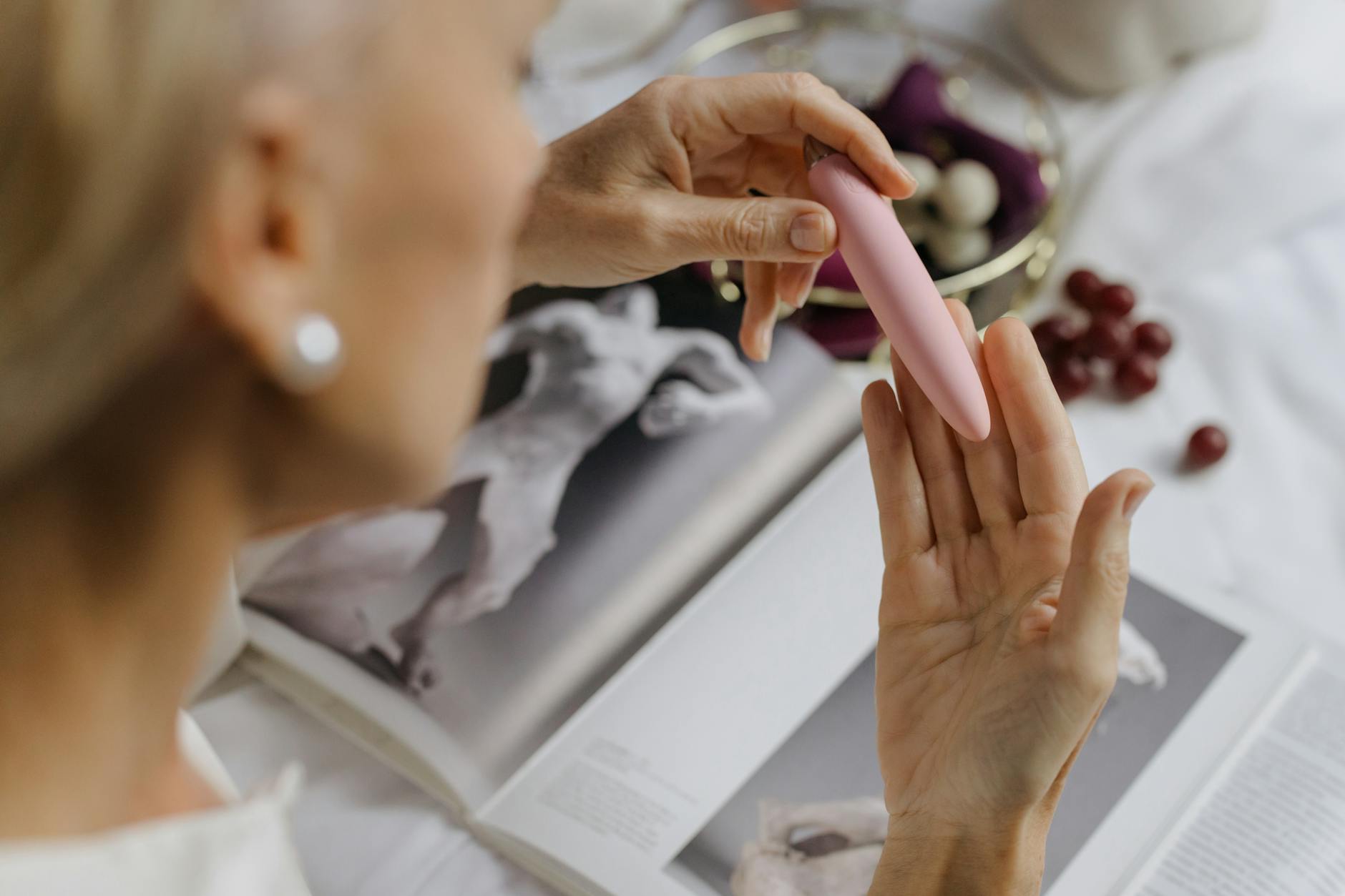
Photo by cottonbro studio on Pexels
What to actually do first
Before you assume numbness is permanent, check these factors. Are you sleeping enough? Probably not. Are you carrying ongoing stress in your body? Almost certainly. Is your baseline anxiety higher than it was a year ago? For most people, yes to all three.
Stress management is the underrated foundation. Yoga, walking, meditation, therapy. Not as "self-care," but as nervous system retraining. A lot of people find that as stress decreases, sensation returns naturally. But this takes weeks or months.
If you need arousal and sensation to return faster, a vibrator works in parallel. You're not choosing between stress management and a tool. You're doing both.
For people on medications causing numbness, talk to your prescriber before assuming the numbness is permanent. Dose adjustments, timing changes, or switching medications can sometimes help. A vibrator bridges the gap while you figure that out.
If numbness is tied to hormonal changes, that's a different conversation. But even there, a lemon clitoral vibrator often helps while you're addressing the hormonal piece.
When sensation starts to return
Here's what's interesting. Most people find that once sensation starts responding to a vibrator, it starts responding to touch again too. It's not that the vibrator replaces touch. It's that it retrains the nervous system that arousal is possible.
After a few weeks of regular use, a lot of people report that manual stimulation works better than it did before they started using a vibrator. The pathway has been activated again. The signal is stronger. You haven't become dependent on the vibrator. You've just reminded your body how to respond.
That's the whole point. You're not stuck with numbness forever. You're using a tool to bridge a temporary gap.
People also ask
How long does it usually take for sensation to return when using a clitoral vibrator?
Most people notice some responsiveness within one to three weeks of regular use, especially if they're using the vibrator 2-3 times per week. Full sensation return (where touch alone starts working again) often takes 4-8 weeks. But this varies wildly based on what caused the numbness. Stress-related numbness can shift faster than medication-related numbness. Hormonal changes might take longer. There's no strict timeline.
Can I use a lemon vibrator if sensation is completely gone?
Yes. In fact, that's when clitoral vibrators work best. Start on a lower pattern and use it for 10-15 minutes. You might not feel much the first time. That's normal. Keep going. The nervous system is learning to recognize the signal again. By the second or third use, most people start noticing response.
Is it normal to need a stronger pattern as sensation returns?
Not necessarily. Most people find the opposite. As sensation wakes up, lower patterns often become more pleasurable. What felt like nothing on Pattern 1 might feel too intense once your nervous system recalibrates. This is actually a good sign. It means sensation is returning.
If I'm on antidepressants, will a vibrator actually work through the numbness?
Often yes, but not always. SSRIs affect arousal and sensation, but they don't eliminate them. A strong enough signal, like the kind a clitoral vibrator provides, frequently gets through where touch doesn't. That said, if your SSRI is causing significant sexual side effects, talking to your prescriber about adjustments is still worth doing.
What's the difference between a lemon vibrator and a standard vibrator for numbness?
Lemon vibrators and similar clitoral-specific designs use gentler, more targeted stimulation patterns. For people with numbness, this matters because it lets you start very low and build gradually. You can also try suction patterns, which feel different from pure vibration. Standard vibrators are often more intense across the board, which can be overwhelming when sensation is already flat.
Can numbness come back after sensation returns?
Yes, if the underlying cause (stress, medication, hormonal changes) returns. That's why the nervous system retraining matters. You're learning what arousal feels like again. If stress spikes or medications change, you might need the tool again. That's not failure. It's just how stress and bodies work.
You're not broken
When your body stops responding to touch, it feels like a personal rejection. Like something inside you has switched off. But that's not what's happening. Your nervous system has just shifted into a different state. Stress, medications, age, and life circumstances all change how your body processes sensation.
A vibrator isn't a workaround for a broken system. It's a signal strong enough to reconnect you to arousal while you address whatever caused the numbness in the first place. As arousal takes longer after 40, tools like lemon clitoral vibrators become practical allies, not luxury items.
Sensation returns. Arousal returns. And often, touch becomes more satisfying than it was before, because you've learned to pay attention again.
If you're ready to try, a clitoral vibrator from Shop Lemon Sex Toys gives you multiple patterns to experiment with. Start low. Be patient. Your nervous system will catch up.
More questions? Reach out to contact us or check our FAQs for support.